Division of Plant Pathology and Microbiology


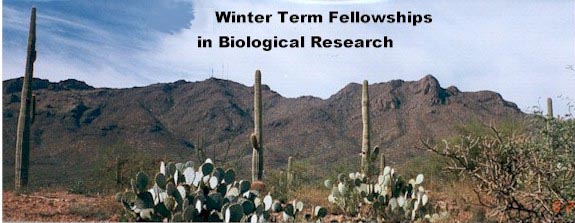
Tucson Desert Landscape
A cooperative program between the University of Arizona and Centre, Colorado, Gustavus Adolphus, Luther, Macalester, Marian College, Mt. Holyoke, and Oberlin Colleges
Martha Hawes, Coordinator
Division of Plant Pathology & Microbiology
520-621-5490

Do you think you might like to pursue a career in science, but would like to experience independent laboratory research
before committing yourself to graduate school?

The Division of Plant Pathology & Microbiology offers fellowships to allow outstanding juniors and seniors to experience independent research during an intensive four-week internship. Students work full time with scientists whose interest encompass basic and applied research in plant, human, and environmental health. Projects involve the use of genomics and other molecular biological techniques to test specific hypotheses about how organisms function and interact with each other.

Winter term fellows chosen competitively from each of the participating undergraduate colleges. The fellowships cover the cost of housing, but students are responsible for their own travel, food and miscellaneous expenses while in Tucson.


PURPOSE | FACULTY | CONTACT

Selections are made through the Biology Departments at the colleges.  For information and to submit an application contact one of the following:

Dr. Peggy Richey at Centre College 
    (859)238-5319/5200/5345 -- richey@centre.edu 
Dr. Amy Clore at New College
    (941)487-4543 --clore@ncf.edu
Dr. Mark Wilson at Colorado College
    (719)389-6996 MWilson@coloradocollege.edu
Dr. Colleen Jacks at Gustavus Adolphus College  
    (507)933-7326 -- cjacks@gustavus.edu 
Dr. Marian Kaehler at Luther College 
    (319)387-1117--kaehlerm@luther.edu 
Dr. Lin Aanonsen at Macalester College 
    (651)696-6470 --aanonsen@macalester.edu 
Dr. Marta Laskowski at Oberlin College
  (440)775-6875 -- Marta.Laskowski@oberlin.edu 


2008
WINTER TERM INTERN FELLOWSHIPS IN BIOLOGICAL RESEARCH IN TUCSON, ARIZONA

PURPOSE: The Winter Term program was started in 1990, to provide students an opportunity for intensive "hands-on" research experience. Students have their own research projects, and are active members of the laboratories they choose. Students take part in weekly laboratory meetings, and generally present a summary of their research accomplishments at such meetings at the end of their stay. In addition, students have the opportunity to attend weekly departmental and interdisciplinary seminars and to take part in graduate level journal clubs and discussion groups. The University of Arizona also has an active Howard Hughes Undergraduate Biology Research Program (UBRP), with more than 100 students, with Winter Term Fellows often taking part in activities sponsored by UBRP. 

Students receive academic credit from their colleges, and the University of Arizona provides financial support to pay for housing. The program is jointly sponsored by The College of Agriculture and the Division of Plant Pathology & Microbiology. Costs of the student's research are provided.

BENEFITS: Former Winter Term Fellows have helped us identify the important benefits of the program, apart from learning research techniques. The program has provided valuable insight into the types of labs that best suit individuals, and the kinds of questions to ask of prospective graduate programs. Numerous Fellows have returned to Tucson to work as full time research assistants during the summer. Students also have made professional contacts who served as references for graduate school, and provided information about graduate programs throughout the world. One year a winter term fellow met faculty who had been educated or had worked in all six of the graduate programs to which he had applied, at the opening reception. 

APPLICATIONS: Undergraduates majoring in biochemistry, biology, ecology, molecular and cellular biology, genetics, or other related disciplines are qualified. Juniors and seniors, and sophomores with special permission, who have a GPA of 3.0 or higher, are qualified to apply for the program. A statement summarizing the student's background, career goals, and the reason for wanting to participate in the Winter Term Program is required. 


Research Interests of Participating Faculty

Students in this program work with an interdisciplinary group of scientists using diverse model systems including plants and microorganisms to examine the biology, ecology, and evolutionary biology of living systems. Such basic research provides new ways to develop environmentally sensitive products for medicine and agriculture.


Vicki L Chandler

Regents Professor, Plant Sciences and Molecular & Cellular Biology,
Director - BIO5 Institute
Ph.D, 1983, University of California, San Francisco

Regulation of gene expression in maize. The anthocyanin biosynthetic pathway in maize is the focus of our work, as it provides an exceptionally tractable system for genetic, biochemical and molecular approaches. A major emphasis in our research is to investigate how the regulatory genes of this pathway are controlled. These regulatory genes, which encode transcription factors that activate the anthocyanin biosynthetic genes, have multiple alleles that produce distinct developmental and tissue-specific patterns of anthocyanin pigments. The availability of regulatory sequences that can control expression in distinct tissues and developmental stages will greatly enhance the potential of genetic engineering. We are also using this system to investigate mechanisms of gene silencing, which has a fundamental role in development and has recently become a major problem with genetic engineering approaches to crop improvement. We use both forward and reverse genetic approaches to study paramutation, the regulation of transposable elements and transgene silencing. Paramutation is a mitotically and meiotically heritable change in gene expression that is induced by allele interactions. We have demonstrated that the heritable change is accompanied by a ten- to twenty-fold reduction in transcription. Recently we have used a combination of classical genetics, genomics, and molecular methods to identify and characterize the minimal sequences required for paramutation, which map within 95-102 kbp upstream of the transcription initiation site. We have also identified multiple mutations in other genes required for the establishment and maintenance of paramutation. We have shown that these mutants also activate a subset of previously silent transposable elements and transgenes, indicating that the wild type proteins are required for multiple gene-silencing processes. Experiments are in progress to clone the genes represented by these mutations and determine their role in gene silencing. As heritable changes in chromatin structure are clearly involved in the establishment and maintenance of distinct transcription states we are also pursuing a functional genomics approach to understand chromatin-level control of gene expression in both maize and Arabidopsis


David Galbraith

Professor of Plant Sciences
Ph.D. Biochemistry 1977, University of Cambridge, England

My program focuses on four main areas: Biological Instrumentation, Developmental Plant Gene Expression, Plant Functional Genomics, and Plant-Insect Interactions. My research support is from NSF, NIH, and USDA, and my research instrumentation has been purchased via support from NSF, DOD, and DOE. I am a co-investigator on two grants recently funded by the NSF Initiative in Plant Genomics. The first, entitled Genomics of Plant Stress Tolerance, aims to characterize those plant genes that are responsive to abiotic stress, particularly osmotic and salt stress. The second, entitled Maize Gene Discovery, Sequencing, and Phenotypic Analysis, is designed to provide scientific resources to the research community, in the form of EST sequences, insertional mutants, and genomic information. My role in these projects centers around the twin techniques of microarray analysis and GFP expression and targeting to characterize the coordination of gene regulation and the subcellular targeting of specific gene products.


David Gang

Assistant Professor of Plant Sciences
Ph.D. in Plant Physiology 1999, Washington State University

My research seeks to elucidate the biosynthetic pathways that produce novel and important plant specialized metabolites (natural products) in aromatic plants, to uncover the mechanisms responsible for the evolution of these pathways in the plant kingdom and to understand the function of a given natural product in the biology and physiology of a given plant species. The most productive approach in this area has been a multidisciplinary one-which utilizes the best tools from the fields of chemistry, biochemistry, molecular biology, plant physiology, whole organism biology and ecology-because understanding the role that a specific metabolite plays in the plant requires an understanding of the whole complexity surrounding its formation and utilization. Tools are only now becoming available which allow us to gain this understanding. Besides the intrinsic scientific value of understanding plant metabolism and how plants produce specific natural products, such knowledge is essential for rational custom-designed breeding (by classical methods) of targeted natural product profiles in chemically tailored plants. This knowledge is also essential for the application of genetic engineering techniques to improve and develop new aromatic plants. My research is currently funded by the NSF, the USDA and the NSF Plant Genome Research Program. The plants of interest at the present are sweet basil, which produces a number of interesting flavor and aroma compounds that also have potential medicinal value, and ginger and turmeric, which produce important anti-inflammatory compounds (and that also confer the pungent properties of these spices).


Martha C. Hawes

Professor of Plant Pathology
Ph.D. Plant Pathology 1982, University of Kentucky.

border cells Bacteria binding to border cells

Plant genes that respond to external signals to control the ecology of the environment. My research program uses techniques and principles of ecology, microbiology, and plant molecular biology to address fundamental questions of how plants response to and influence their environment. Many plants are programmed to undergo a surprising and unique process: They produce and release thousands of healthy living cells into the external environment surrounding their roots. The function of this process is unknown. My hypothesis is that plants can afford to expend a great deal of energy to carry out the release of these root "border" cells because the process allows the plant to regulate the balance of beneficial and pathogenic microorganisms that can colonize the plant. Because the balance of associated microorganisms in plants, as in humans, can make the difference between a healthy plant and a dead one, the benefits are worth the cost. Our experimental approach to test this hypothesis is to genetically engineer plants with specific alterations in the properties of border cells. If it is true that border cells are required by the plant to regulate the ecology of the root, then the changes we make can be expected to result in predictable changes in the populations of microorganisms that survive and grow near the root. Such studies will allow us to define this uniquely specialized "tissue" of the plant's root system. The system also can be exploited for practical purposes, to protect plants from disease with minimal deleterious effects on the environment. Border cell specific genes can be used to develop transgenic plants which resist disease without the need for toxic chemicals. Molecules needed to protect against fungal, bacterial, or nematode pathogens can be delivered to the root system under the control of genes expressed in border cells. 


Lindy Brigham

Research Assistant Professor
Ph.D. Plant Pathology 1996, University of Arizona.

Root Cap Shikonin accumulation in root tips

Chemical Communication Between Plant Roots and Microorganisms.   How do plants communicate with the other organisms?  One way is with the myriad chemicals that they produce that give them both culinary interest and medicinal properties of use to humans.  I am interested in understanding how plants, as organisms that cannot flee from adversity or move to more desirable environments, use these chemicals to establish beneficial relationships and deter dangerous ones in the soil around their roots.  The Borage, Lithospermum erythrorhizon, produces a suite of related chemicals that have been used by many human cultures for several centuries for divers applications from a beautiful red/purple dye for wine and clothing to a topical antibiotic for skin lesions.  The compounds are produced only in the root and the cell types in which they are produced and the ratios of the different compounds produced are regulated by the plant in response to signals we are just beginning to understand.  My work involves studying the way in which the plant regulates the production of these compounds and the divers effects on the bacteria and fungi in the soil.  The system provides a wonderful research tool to study the interactions not only of plants and microorganisms, but also how these properties are used by human communities through time.


Christina Kennedy

Professor of Plant Pathology and Molecular & Cellular Biology
Ph.D. Microbiology, Massachusetts Institute of Technology.  

Acetobacter diazotrophicus

Genetics and regulatory mechanisms of nitrogen fixation in rhizosphere bacteria. The agricultural yield of most crops is limited by the availability of fixed nitrogen, so chemical fertilizers must be applied. Biological nitrogen fixation is effective for legumes and a few other plant groups because symbiotic nitrogen fixing bacteria live within root nodules. These bacteria contain the enzyme nitrogenase which converts atmospheric nitrogen to ammonia. My work concerns the control of nitrogenase synthesis in Azotobacter, an important soil bacterium. Environmental stimuli such as fixed nitrogen, metals, and oxygen are sensed by proteins that regulate the expression of the bacterial genes encoding nitrogenase. Analysis of regulatory proteins and their interaction with promoters of genes for nitrogen fixation is a major theme of my research. Promoter sequences necessary for activator binding were identified. We have isolated mutants of Azotobacter vinelandii that excrete large amounts of ammonia. These nifL mutants provide new opportunities for both basic science and biotechnology: defining the regulatory mechanisms for ammonia control of nitrogen fixation and increasing the ability of bacteria to supply fixed nitrogen to plants. This knowledge is now being applied in studies of newly-discovered nitrogen fixing endophytic bacteria found in sugarcane and other graminaceous plants. 


Scott Kroken

Assistant Professor of Plant Pathology and Microbiology
Ph.D. Plant Biology and Microbiology, University of California, Berkeley.

Evolution of pathogens and their hosts. Most recent evolutionary studies look for the pattern of evolution through phylogenetic and population genetic studies, using selectively neutral molecular markers. The results of these studies have been used to infer the process of evolution, such as adaptation and diversification. The sequencing of entire genomes has given us the list of all genes within many species, most of which have yet to be characterized. As we come to understand which genes direct which processes in an organism, we can begin to study how these genes help an organism adapt to its environment, and how the functions of these genes vary among different lineages. The goal of my research program is to investigate fungal species for the types of genetic changes that can result in key phenotypic changes.

How have fungi have diversified into so many ecological roles? For example, as pathogens have evolved repeatedly from non-pathogenic fungi, which genes have been co-opted into new roles as agents of pathogenicity? Many euascomcyete fungi have already been sequenced: the saprobes Neurospora crassa and Aspergillus fumigatus, the plant pathogens Magnaporthe grisea and Fusarium graminearum, and the human pathogen Coccidioides posadasii. All of these fungi make many toxins, with the exception of Neurospora, which has relatively few secondary metabolite genes and gene clusters. Phylogenetic analyses show that all euascomcyete fungi, regardless of ecological role, share the same families of secondary metabolite genes. However, there are astonishingly few orthologous genes and gene clusters between genomes, a result that suggests rampant duplication and divergence, but also rampant gene loss among genomes. The associated genes in gene clusters, in addition to transporters and regulatory genes, appear to include or comprise the genes of a biochemical pathway that produce and decorate the metabolite. In addition, gene clusters often contain self-protection genes, including efflux transporters, detoxifying enzymes, and putative target decoys (paralogs of the enzyme that the toxin targets). The analysis of these coding and regulatory regions of these gene clusters is being used to 1) predict the gene expression of the genes, and the metabolite produced and its function, and 2) analyze the evolution of gene clusters, including duplication, recombination, and incorporation of novel genes from primary metabolism. The results of these studies will aid in the functional characterization of novel secondary metabolites


Brian A. Larkins

Ph.D. Botany, University of Nebraska
Professor of Plant Sciences and Molecular & Cellular Biology

Regulation of protein synthesis during seed development. My research is in the genetic regulation of plant cell development and differentiation. Research of this nature can be applied to a variety of plant systems, but seeds are particular well suited to study these processes. Furthermore, seeds are an important agricultural product and are a major importance as primary or secondary sources of food. During their development seeds accumulate large amounts of protein, carbohydrate and lipid that are subsequently digested and made available to the developing embryo. The nature and proportion of these storage products varies among different plant species, although the mechanisms regulating their synthesis are conserved. In a number of instances, mutations have been identified that qualitatively or quantitatively alter the synthesis of these compounds. Seed storage proteins are synthesized in large quantities over a limited period of time. In dicots, these proteins are deposited in the embryo as well as in the endosperm of the developing seed. In cereals, deposition primarily occurs in the endosperm, where storage proteins account for the majority of the protein, seed proteins generally have limited nutritional value. One important research is directed at increasing the nutritional value of seed proteins. The storage proteins of different cereals have distinct structural characteristics that are responsible for their unique food making characteristics. Only recently has research begun to define the structural features that are responsible for their unique biochemical properties. We are studying mutations that alter the synthesis of maize seed storage proteins. Although some of these mutations affect regulatory genes that control transcription of the storage protein genes, the precise mechanisms by which the others alter storage protein synthesis are unknown. We have found that structural interactions between the different types of storage proteins appear to influence their assembly into protein bodies, and ultimately the quality characteristics of the seed.


Marc J. Orbach

Associate Professor of Plant Pathology, Program of Genetics
Ph.D. 1988, Molecular Genetics, Stanford University  

Molecular genetics of fungal cultivar specificity genes in Magnaporthe grisea. My research program uses Magnaporthe grisea, the fungal pathogen responsible for the rice blast disease, as a model system to study host pathogen interactions at the molecular and biochemical level. The main focus of my program is to understand the signals between a host and pathogen that dictate whether the host is able to resist disease. Genetic analysis of M. grisea has identified several "avirulence" genes. These genes determine in a cultivar- specific manner, whether the fungus is able to cause disease. My laboratory is isolating and characterizing these genes to determine what their products are and how these products interact with host plants to induce host defenses. Additional research in the laboratory includes: (1) Studying genome variation in M. grisea at the whole genome level using electrophoretic karyotyping methods; and (2) Characterization of a transposable element to determine whether it plays a role in genome variation and the mutability observed at some loci. 


Elizabeth A. Pierson


Leland S. Pierson, III

Associate Professor of Plant Pathology
Ph.D. 1986 Microbiology/Molecular Genetics, Washington State University  

Mechanisms involved in the biological control of soilborne plant pathogens; molecular basis of microbial gene expression in the rhizosphere. My research is aimed at understanding, at the molecular level, the mechanisms regulating gene expression in microbial populations colonizing the environment surrounding plant roots (the "rhizosphere"). My laboratory is interested in understanding how the plant host, competing microorganisms including plant pathogens, and the environment affect this regulation. Our model system is the genetic regulation of the phenazine antibiotic biosynthetic locus in Pseudomonas aureofaciens strain 30-80. This free living root colonizing bacterium can protect the roots of wheat from infection by the fungal pathogen Gaeumannomyces graminis var, tritici (Ggt), which causes take-all disease of wheat. We have shown it is the production of these unusual phenazine antibiotics that is responsible for "biological control." The phenazines are broad spectrum antibiotics effective against a diverse range of other pathogenic bacteria and fungi. We have cloned the genes responsible for antibiotic biosynthesis (phz genes). In addition, we have identified two regulatory genes (phzR and phzI) that are required for phenazine gene expression. One gene (phzR) encodes a positive transcriptional activator protein. The other regulatory gene (phzI) encodes a protein which converts a cellular precursor into a diffusible signal molecule that must accumulate to a threshold concentration before phenazine gene expression can commence. These genes are members of a family of cell density-response regulators present in many diverse bacterial species. We have found that many other rhizosphere bacteria also produce diffusible signals and have proposed that these signals may serve a communication role in microbe-microbe interactions on plant roots. Ongoing research in my laboratory includes: (1) Analysis of phenazine regulatory regions at the DNA sequence level; (2) Identification and characterization of unlinked regulatory genes that affect phenazine gene expression; (3) Gene expression studies using beta-galactosidase and ice nucleation gene fusions; and (4) in situ studies examining the effect of the host plant, indigenous microbial populations, and the fungal pathogen on phenazine gene expression in the rhizosphere. 


Barry Pryor


Karen S. Schumaker

Associate Professor of Plant Sciences and Molecular and Cellular Biology
Ph.D, in Botany, 1987, University of Maryland

The ability to detect and respond to environmental changes is critical for all living organisms. We are using Arabidopsis to study environmental stress perception and signal transduction. A major focus of our work is the dissection of the regulatory pathways that control intracellular Na+ homeostasis in organisms exposed to excessive salt. Plant cells are especially sensitive to NaCl in the environment because Na+ disrupts K+ uptake by root cells and, when Na+ enters into cells, it becomes toxic to enzymes. In order to prevent growth inhibition or cell death, excessive Na+ must be extruded from the cell or compartmentalized in the vacuole. Therefore, proper regulation of the proteins that mediate ion flux is necessary for cells to keep concentrations of toxic Na+ low and to accumulate essential ions. Recently, through the identification of Arabidopsis mutants that are salt overly sensitive (sos) and the cloning and characterization of the SOS genes, a novel signaling pathway that mediates ion homeostasis and salt tolerance in Arabidopsis has been discovered. In this pathway, a myristoylated calcium (Ca2+)-binding protein, SOS3, senses cytosolic Ca2+ changes elicited by salt stress. SOS3 physically interacts with and activates the protein kinase, SOS2. The SOS3-SOS2 kinase complex phosphorylates and activates the transport activity of the plasma membrane Na+/H+ exchanger encoded by the SOS1 gene. To fully understand how intracellular Na+ levels are regulated during salt stress, we are focusing on the molecular identification of the proteins that are responsible for changes in cytosolic Ca2+ in response to the salt signal and determining how the individual proteins that are involved in the transport of Na+ (H+-pumps and Na+ transporters) are regulated; identification of the SOS pathway has provided a critical starting point for these studies.


S. Patricia Stock

Assistant Research Professor
Ph.D. in Natural Sciences (Parasitology), 1992, University of La Plata, Argentina

My current research interest at the Department of Plant Pathology is focused on the study of plant-parasitic, free-living and insect parasitic nematodes, their diversity in agricultural and natural ecosystems. I am also interested in nematode ecology, particularly understanding host-parasite relationships and interactions. I also have an active research program on insect pathology and the use of entomopathogenic nematodes as biological control agents. The overall objective of this program is to develop entomopathogens as effective biocontrol agents against major agricultural pests in Arizona.

In addition to developing a deeper understanding of the biology and ecology of the nematode fauna in Arizona, which at present is very scarce, my expectations are that throughout my research program I will provide valuable resources for developing new management alternatives, developing biological control tactics, enhancing the role of beneficial nematodes in soil/plant nutrient cycling and exploiting the potential biological control of plants and insects with nematodes.

One of my current research projects at the University of Arizona is focused on the diversity of nematodes in oak woodlands of Southeastern Arizona. As in California, the diversity of oak species in Arizona is broad. However, in contrast to California where oaks form a continuum along and across the state, the distribution of oak woodlands in southeastern Arizona is fragmented and mainly confined to higher elevations (4,500-7,500 ft.) in different mountain ranges. The particular distribution of oak woodlands in the "sky-islands" of southeastern Arizona provides an interesting framework for studying population structure of nematodes associated with these habitats, as well as the evolutionary and ecological forces that contribute to their diversification.


 Hans D. VanEtten

Professor of Plant Pathology and Molecular & Cellular Biology
Ph.D. in Plant Pathology 1971, Cornell University  

Fungal lesions

Microbial detoxification of plant antibiotics. My main research interests are in elucidating the specific molecular properties that allow pathogenic fungi to overcome natural resistance mechanisms in plants. Many plants synthesize antibiotics (phytoalexins) in response to infection by microorganisms and these compounds can serve as a natural barrier to potential pathogens. We have been investigating the possibility that some successful pathogens are able to overcome this resistance mechanism by evolving specific enzymes to detoxify the phytoalexins produced by their host plants. Our main model pathogen-plant interaction is the disease on pea caused by the fungus Nectria haematococca. Our results indicate that the pathogenicity of this fungus on pea requires pisatin demethylase (pda), a substrate-inducible cytochrome P-450 that detoxified the pea phytoalexin pisatin. A gene encoding this cytochrome P-450 has been isolated and used to demonstrate that there is a family of Pda genes in N. haematococca. Furthermore, pda may be a common requirement for other pathogens of pea, and detoxification of the phytoalexins from another plant appears to be mediated by cytochrome P-450s. Current effort is devoted to characterizing these cytochrome P-450s with the purpose of determining whether these are specific cytochrome P-450s that have evolved in fungi for plant pathogenesis. A portion of our research effort is devoted to engineering disease resistance in plants. The strategy is based on our findings that implicated phytoalexin detoxification as an import trait for pathogenicity. The approach is to alter the genome of the plant so that it synthesizes other than its usual spectrum of phytoalexins. Pathogens lacking the specific enzymes to detoxify these altered phytoalexins would thus be unable to cause disease on such transgenic plants. 


Associate Professor of Plant Pathology
Ph.D. Plant Pathology, Kansas State University

Molecular characterization of plant-virus interactions. Plant viruses are pathogens consisting of only nucleic acids and proteins. Because of their simplicity, they are excellent model systems for studying plant-pathogen interactions at the molecular level. Red clover necrotic mosaic virus (RCNMV) is a small RNA plant virus with two genomic RNAs which have been sequenced and mapped in our laboratory. We have developed infectious RCNMV cDNA clones. RNA transcripts identical to viral RNAs can be synthesized in vitro from the infections clones, and are infections when they are introduced to plants. This system allows introduction of specific mutations into viral RNA genomes at the DNA level. These mutations are being used to identify functions of viral genes. In another project, plant resistance to viral infection at the molecular level is being characterized. Plant varieties have been bred to combat potato virus (PVY), an economically important virus which causes heavy losses in crop production. We are studying how an avirulent strain of PVY can evolve to a virulent strain, and what changes in the viral genome enable the virus to over plant resistance. Students in my laboratory will learn techniques of virus purification, cDNA cloning of viral RNA, development of infections cDNA clones, and identifying and sequencing the viral gene(s) response for the breakdown of plant resistance. 


Ramin Yadegari

Assistant Professor of Plant Sciences
Ph.D. 1996 Molecular, Cell & Development Biology, UCLA

In angiosperms, double fertilization within the female gametophyte initiates the development of a diploid embryo and tripod endosperm from the egg cell and the central cell, respectively. Endosperm develops within the seed along with the embryo as an energy-rich storage organ supporting embryo or seedling development. In Arabidopsis, Polycomb-group (Pc-G) proteins negatively regulate endosperm proliferation before fertilization. Previously-identified Pc-G protein interactions, including the molecular partnership of WD and SET-domain proteins, were shown to be conserved between animals and plants. However, the precise composition of the plant Pc-G complex and the molecular basis of its function in control of endosperm proliferation are unknown. Our research has shown that Pc-G genes are active in maternal tissues before fertilization; this activity is likely regulated by mechanisms that specifically activate Pc-G gene expression from the maternal allele and at the same time maintain the silenced state of the paternal allele. Our current studies are focused on understanding the epigenetic mechanisms involved in the regulation of Pc-G gene expression and characterizing the composition of the Pc-G complex that controls the initiation of endosperm development in Arabidopsis.


Last revised on October 2004
Division homepage