|
Plant Pathology - Mike Matheron |
|
My research program is focused primarily on the biology of fungal plant
pathogens and the ecology and management of economically important diseases
of fruit and nut trees, vegetable and certain field crops that occur in
Arizona. The primary goal of this research is to develop new or improve
upon existing practical solutions for plant disease problems confronting
growers in Arizona.
|
| Two fungal pathogens of citrus
are responsible for yield losses as well as death of infected trees. One
of these pathogens, Phytophthora, is a soil-borne fungus that infects
and destroys root and trunk tissue of citrus trees. Effective disease management
strategies have been developed for root rot and gummosis caused by Phytophthora.
On the other hand, Coniophora infects the above-ground portions of
lemon trees, colonizing and destroying wood tissue. This disease has reached
epidemic levels in mature lemon groves in southwestern Arizona. Effective
management approaches for Coniophora brown wood have not yet been developed;
therefore, a major research effort is directed at studying the biology of
the pathogen and the ecology of disease development, so that effective disease
control strategies can be formulated. |
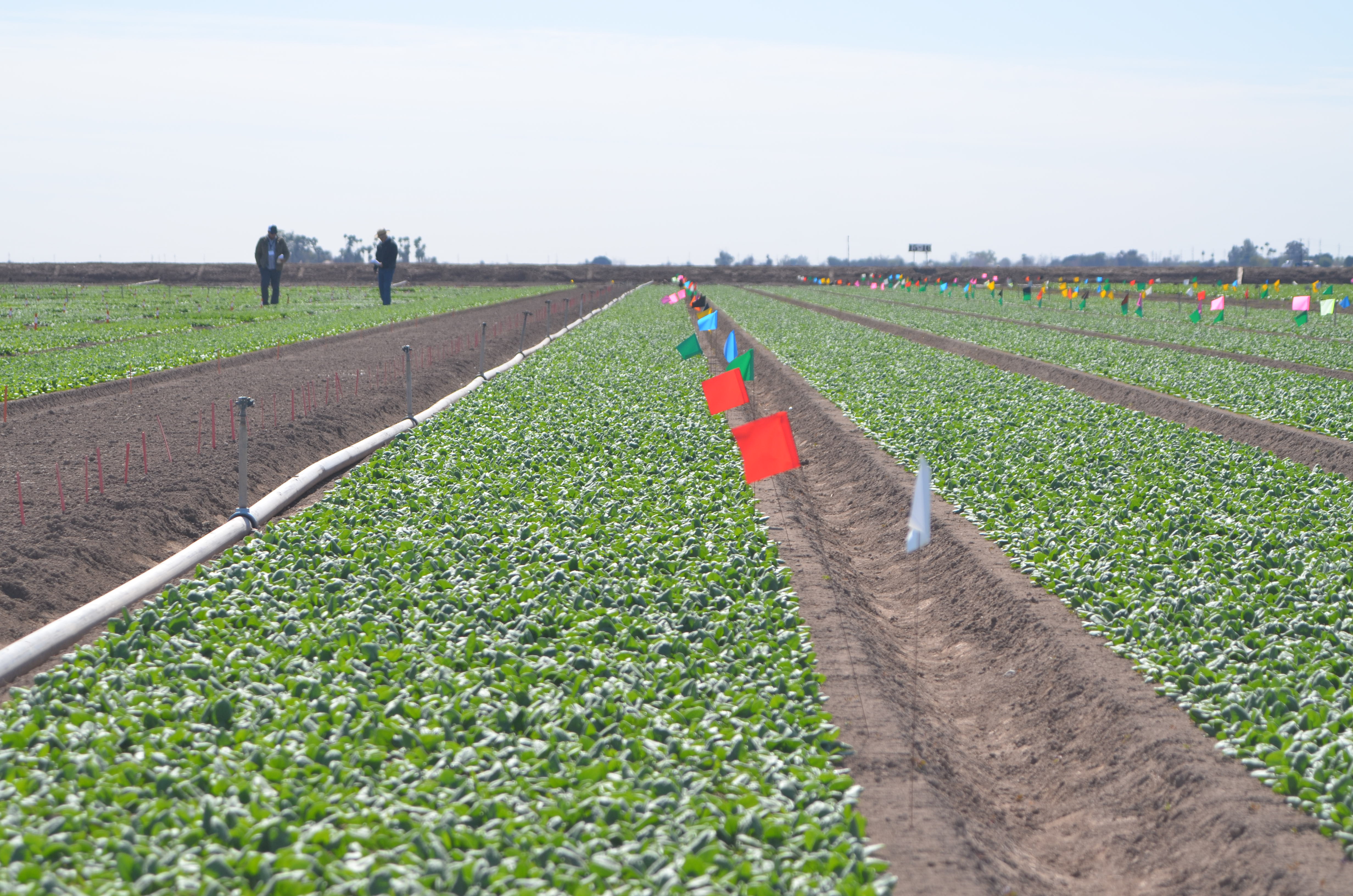
| Several diseases caused by plant
pathogenic fungi effect the vegetable industry in Arizona. Downy mildews
are important diseases on broccoli, cabbage, cauliflower, lettuce and onions.
Powdery mildews can cause significant yield losses on lettuce and melons.
Sclerotinia leaf drop is a significant disease problem on lettuce in Arizona
and essentially everywhere this crop is grown. The severity of these diseases
is greatly influenced by the environment. Downy mildews and Sclerotinia
leaf drop are enhanced by cool moist conditions, whereas powdery mildews
are favored by a dry and relatively warm environment. Effective management
of these diseases caused by fungi involves the integrated use of host resistance
as well as cultural and chemical disease control approaches. The use of
fungicides is and will likely continue to be an important component of the
total disease management tool kit. Many new fungicides are being developed
with novel modes of action and with a reduced risk toxicological profile
to nontarget organisms. I conduct a comprehensive field testing program
each year to compare the efficacy of these new chemistries to established
fungicides and to establish effective rates and application sequences on
lettuce, broccoli and cantaloupes.
|
| Nonchemical disease management
studies are also in progress. One of these investigations involves the analysis
of soil conditions that will promote rapid destruction of the overseasoning
sclerotia of the fungi that cause Sclerotinia leaf drop of lettuce. In another
long-term experiment, the world peanut collection is being examined to discover
potential resistance in this plant to preharvest aflatoxin contamination,
a costly and serious food safety problem confronting peanut producers and
consumers around the world. |
The intent of my outreach activities
is to develop and deliver educational programming pertaining to plant diseases
and their management to clientele in Arizona as well as to a broader worldwide
audience. Effective control of any plant disease involves the development
and use of an integrated disease management system. The components of disease
management systems are developed from my research as well as information
from other sources.
|