Latest | NEWS
June 2023 | Jones earns doctorate degree

Scott Jones successfully defended his dissertation project: Ecosystem Services on Shrub-Encroached Rangelands: Balancing Supply and Demand.
One of Dr. Jones's dissertation data chapters, entitled “Topoedaphic constraints on woody plant cover in a semi-arid grassland" has been accepted for publication in the journal Ecological Indicators, which has an Impact Factor of 6.3. Another data chapter from Scott’s dissertation, "Shrub encroachment and stakeholder perceptions: balancing conservation and management” has been submitted to Ecology and Society.
February 2023 | ARCHER honored at Rangeland Society Meeting
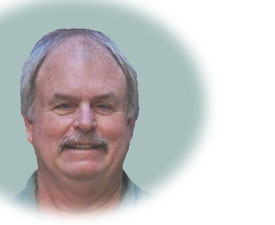
Dr. Steve Archer was recognized at the 2023 Rangeland Ecology Meeting in Boise, Idaho during a half-day symposium entitled “An Appreciation of the Contributions of Dr. Steve Archer to Arid Land Ecology and the Management of Rangelands."
May 2022 | RUTHERFORD earns doctorate degree
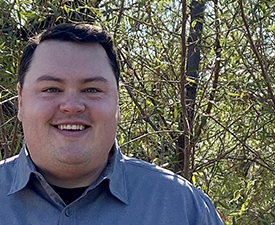
William A. Rutherford successfully defended his dissertation project: Mechanisms and proactive management of woody plant encroachment on southwestern rangelands. His work "explored several potential constraints on shrub recruitment for informing the development of proactive brush management alternatives. At the plant-level, drought conditions reduced germination and slowed seedling growth but did not prevent early recruitment, where morphological traits over physiological traits were key for seedling performance. In the field, seed germination and early seedling survival readily occurred under a wide range of precipitation, livestock grazing, and seed/seedling predator conditions. Across the SRER, random forest models helped to identify the most important determinants of woody cover. The developed modeling framework detected sites most at-risk for encroachment and could be used to improve planning efforts with respect to the location, type (e.g., prescribed fire), and timing of brush management."
Dr. Rutherford is currently a Research Ecologist (postdoc) at the USDA-Agricultural Research Service Southwest Watershed Research Center.
2021 | RUTHERFORD receives USDA NIFA Pre-doctoral Fellowship
William A. Rutherford will be receiving a USDA NIFA Pre-doctoral Fellowship beginning in fall 2021. These fellowships are aimed at developing new scientists and professionals to enter research, education, and extension fields within the food and agricultural sciences to address emerging challenges of the 21st century. These grants are a part of NIFA’s Agriculture and Food Research Initiative. Austin’s project is titled “Managing From a Distance: Conservation of Semi-Arid Grasslands Through Machine Learning.” Steve Archer is Austin’s graduate advisor.
30 April 2021 | McINTYRE earns doctorate degree

Dr. Cheryl McIntyre successfully defended her dissertation project: Influence of Biocrusts and Seed Morphology on Emergence and Establishment of Grasses in Two North American Deserts. Her work “focused on the Sonoran Desert and Colorado Plateau and utilized a coordinated set of experiments to investigate how interactions between biocrust attributes (i.e., source desert, development, and integrity) and grass attributes (i.e., nativity and seed characteristics) might influence grass emergence and early establishment.”
Dr. McIntyre is presently an Ecologist with the National Park Service Inventory and Monitoring program. Based in Tucson, AZ, Cheryl works with the Chihuahuan Desert, Sonoran Desert, and Southern Plains networks.
McIntyre, C.L. 2021. Influence of biocrusts and seed morphology on emergence and establishment of grasses in two North American deserts. PhD Dissertation, School of Natural Resources and the Environment, University of Arizona, Tucson.
15 April 2021 | ARCHER designated University of Arizona Regents Professor
Dr. Steve Archer was designated a Regents Professor by the Arizona Board of Regents. “The designation of Regents Professor is an honored position reserved for faculty scholars of exceptional ability who have achieved national or international distinction. The Regents Professor title serves as recognition of the highest academic merit and is awarded to faculty members who have made a unique contribution to the quality of the university through distinguished accomplishments in teaching, scholarship, research or creative work.”
17 May 2021 | PIERCE earns doctorate degree
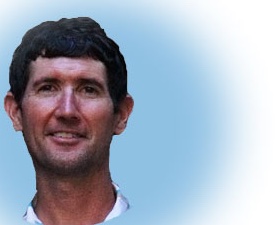
Dr. Nate Pierce successfully defended his dissertation project: Plant-Plant Interactions During Arid Grassland-Shrubland State Transition. His work "addressed the [role of biotic interactions between grasses and shrubs in state transition dynamics] over 4 years using field-based selective removal experiments with shrubs (Prosopis glandulosa) and grasses (Bouteloua eriopoda) at the Jornada Experimental Range and long-term ecological research (LTER) site in the northern Chihuahuan Desert."
Dr. Pierce is presently a research specialist with the USDA-Agricultural Research Service Southwest Watershed Research Center in Tucson, AZ
Pierce, N.A. 2021. Plant-plant interactions during arid grassland-shrubland state transition. PhD Dissertation, School of Natural Resources and the Environment, University of Arizona, Tucson.
July 2020 | NAITO hired as tenure track Assistant Professor
Dr. Adam Naito will join the Department of Earth, Environmental and Geographical Sciences at Northern Michigan University as a tenure-track Assistant Professor position in the fall of 2020.
26 May 2020 | RUTHERFORD receives GC-GIDP Research Award
William A. Rutherford will be receiving a Global Change - Graduate Interdisciplinary Program (GC-GIDP) Summer Research Award from the Global Change Minor Progam at the University of Arizona. The program provides "up to $1500 in summer funding for graduate students enrolled in the Global Change minor in support of their research. In light of the current pandemic and limitations on travel for fieldwork or professional conferences, the purpose of this summer grant is to provide financial support for graduate students while they advance their interdisciplinary research during a time of reduced funding and travel restrictions."
Rutherford's award will provide him financial support as he begins to complete his dissertation work investigating how herbivory by livestock, ants, rodent, and/or lagomorphs interact with precipitation to influence the probability of exotic grass and shrub seedling establishment in desert grasslands.
06 May 2020 | BURLESON receives Student Leadership Award

Cameron Burleson received the 2020 School of Natural Resources and the Environment (SNRE) Student Leadership Award. She was nominated by her supervisor, Dr. Adam Naito, who noted her "intellect, maturity, independence, adaptability, and promise as a scientist to be indispensable... [She] exemplifies the best of what students in SNRE and the College of Agriculture and Life Sciences, and she sets a standard for a new generation of scientists and individuals dedicated to improving our environment."
Cameron served as a student crew leader in the Archer Lab on the project Brush management and ecosystem services: a quantification of trade-offs on Western rangelands for the 2019-2020 academic year, as well as Vice President of the undergraduate range management organization Tierra Seca. She joins two previous undergraduates who worked in the Archer Lab in the last three years who received the Student Leadership Award, including Emily Runnion and Victoria Friess.
06 May 2020 | LEISER receives Outstanding Student Assistant Award
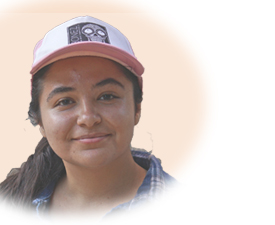
Tzirel Leiser received the 2020 School of Natural Resources and the Environment (SNRE) Outstanding Student Asisstant Award. She was nominated by her supervisor, Dr. Adam Naito, who noted that she "holds great promise as a budding scientist with interests in ecology, natural resources, rangeland management, and data visualization...[and] exemplifies the best of a new generation of aspiring researchers and brings a diverse portfolio of experiences and perspectives."
Tzirel served as a student field technician in the Archer Lab on the project Brush management and ecosystem services: a quantification of trade-offs on Western rangelands for the 2019-2020 academic year, as well as Secretary of the undergraduate range management organization Tierra Seca. She joins Cameron Burleson as two undergraduates who worked in the Archer Lab in the past two years who received the Outstanding Student Assistant Award.
06 May 2020 | BURLESON, GRAY, and LEISER win series of awards at SRM Annual Meeting
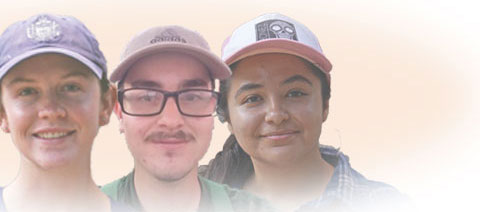
Cameron Burleson placed second in the individual level of the Undergraduate Range Management Exam (URME), as well as leading her team to first place in the team level URME exam at the Society for Range Management Annual Meeting in Denver, Colorado, in February. Cameron was one of 189 students taking the exam, and her team was one of 25 teams. The exam provides students an opportunity to demonstrate higher order learning skills and synthesis knowledge of the art and science of rangeland management.
Tzirel Leiser placed first in the Extemporaneous Speaking Contest. In this contest of 35 students, each student selects one of three topics drawn from a pool of 150 possible provided topics related to range management and have 2.5 hours to develop a 5-7 minute presentation on that topic. Tzirel's topic was C3 photosynthesis and photorespiration.
Tzirel and William Gray also took 1st place as a team in the Rangeland Cup in a competition of 10 teams. The rangeland cup team problem solving competition is an activity to promote critical thinking and cooperative, collaborative work on current topics and/or topics of historical importance to rangeland ecology and management. This competition is intended to build skills in interpersonal communication and group problem-solving.
Cameron, Tzirel, and Will as part of the student organization Tierra Seca also took 1st place in the Collegiate Trail Boss competition. The Collegiate Trail Boss award is presented to the university or college that generates the highest aggregate score for competitions at collegiate student activities during the SRM annual meeting. It is the highest honor that a university team can be awarded at this international conference.
Cameron and Tzirel both work for the Archer Lab as student crew leader and technician (respectively) on the project "Brush management and ecosystem services: a quantification of trade-offs on Western rangelands". Will works for the Archer Lab as a a technician on the project "Exotic grass and woody plant encroachment: mechanisms of invasion and opportunities for containment?"
28 January 2020 | KAUFMAN'S internship featured by ENVS

The Department of Environmental Science (ENVS) at UArizona recently featured Ella Kaufman's internship with the Archer Lab as a blog feature on the department homepage. Ella's internship centered around the project Brush management and ecosystem services." In concert with her technician duties, Ella received internship credit as part of her degree requirements. In addition, he gave a 10 minute public presentation to students, faculty, staff of ENVS on Mon Nov 18, 2019, and this presention detailed her responsibilities and what she learned over the course of her involvement during the Fall 2019 semester.
Ella is a sophomore pursuing a degree in Environmental Science with an emphasis in the Biosphere. Ella hails from Michigan and has been working with the Archer Lab since September 2019.
22 August 2019 | RUTHERFORD awarded WSARE grant
Austin Rutherford received a Western Sustainable Agriculture Research and Education (WSARE) graduate student grant to support his dissertation research. One of his goals is to develop a SEEDS (Shrub Encroachment Early Detection System) framework for federal, state, and county land managers/rangeland specialists, ranchers, and the general public as a proactive and preventative measure to woody plant encroachment (WPE) to maximize the effectiveness of brush management strategies.
Austin's collaborators on this effort include his advisor, Dr. Steven Archer, as well as Dr. Larry Fisher, Dr. Elise Gornish, Dr. Willem van Leeuwen, and Patricia King (president of the Altar Valley Conservation Alliance).
Austin is third graduate student in the Archer Lab to receive a WSARE grant in the last five years. Other recipients include Scott Jones and Cheryl McIntyre.
15 August 2019 | RUTHERFORD selected as CALS Data Science Ambassador
Austin Rutherford has been accepted into the Data Science Ambassadors (DSA) program. The program is sponsored by the Data Science Institute (Data7) at the University of Arizona and seeks to promote and support data science literacy across the University. As an ambassador for the College of Agriculture & Life Sciences, Austin will be expected to:
- Participate in monthly meetings with other ambassadors.
- Complete a training curriculum.
- Develop an engagement plan for each semester that may include: (1) mapping data science needs and expertise within CALS (2) developing training and outreach programs related to data science, and/or (3) developing and engaging in a research study that is related to sociocultural and organizational processes around the practice of data science.
Austin's ambassadorship starts on August 26, 2019 and ends on May 31, 2020. Learn more about the 2019-2020 DSAs here.
15 August 2019 | BURLESON receives ACIF Coughlin Scholarship
Cameron S. Burleson is the recipient of the 2019 Coughlin Scholarship, awarded by the Arizona Cattle Industry Foundation (ACIF). Since 1993, ACIF has provided scholarship funds to support college students purusing careers related directly or indirectly to the cattle industry. ACIF is part of the Arizona Cattle Growers' Association, a non-profit trade association formed in 1903 and represents Arizona ranchers and beef producers in legislative and regulatory affairs. This is the third consecutive year Cameron has received a ACIF scholarship, and these scholarships are providing her financial support as she pursues her degree in Natural Resources with an emphasis in the Ecology, Management, and Restoration of Rangelands.
Cameron is a student crew leader on the project "Brush management and ecosystem services: a quantification of trade-offs on Western Rangelands," a technician in Dr. George Ruyle's lab, and a biological research technician with the Agricultural Research Service of the US Department of Agriculture.